ASEAN Summit stands at critical juncture of reconfiguring cooperation
ByGu Qingyang
The 48th ASEAN Summit comes at a moment of mounting global uncertainty. A sluggish economic recovery, persistent geopolitical tensions and the gradual fragmentation of the international system have elevated this meeting, being held in Cebu City, the Philippines, beyond routine diplomacy. It is, in effect, a test of whether regional cooperation can evolve from an efficiency-driven model toward one anchored in security and resilience.
As the world's fifth-largest economic bloc, ASEAN occupies a pivotal position in global supply chains and regional cooperation networks. Its strategic choices will shape not only its own trajectory but also regional stability and global economic expectations.
The most immediate pressure stems from the spillover effects of instability in the Middle East, particularly through energy markets. Although the conflict is geographically distant, its economic consequences are amplified in Asia. The region's concentration of manufacturing and its heavy dependence on imported energy have created structural vulnerabilities. Fluctuations in energy prices are rapidly transmitted through production systems, affecting industrial costs, inflation and ultimately social stability. What begins as a price shock can quickly escalate into a broader systemic risk.
Short-term emergency responses are no longer sufficient. ASEAN must use the summit to forge a shared understanding that goes beyond stabilizing current markets. The more urgent task is to develop long-term mechanisms capable of absorbing external shocks and managing structural risks. This requires not only policy coordination but also a shift in the underlying logic of regional cooperation.
At a deeper level, the global economic paradigm itself is undergoing transformation. For decades, globalization has been driven primarily by efficiency and cost optimization. Today, that model is giving way to a new phase increasingly defined by security considerations.
Energy routes, supply chains and financial systems are no longer treated as neutral market instruments but as strategic assets. As a result, reliance on market forces alone is insufficient to manage the rising uncertainty. Regional cooperation must therefore evolve from facilitating trade to safeguarding systemic stability.
ASEAN-led frameworks now face a new historical mandate. Existing arrangements such as ASEAN Plus Three (the cooperation framework comprising the 10 ASEAN member states plus China, Japan and South Korea) and the Regional Comprehensive Economic Partnership, provide a solid institutional foundation for regional integration.
However, they were largely designed to promote trade liberalization and efficiency. Their capacity to address emerging challenges such as energy security and supply chain resilience is limited. The key question for this summit is whether ASEAN can lead a transition from supply chain integration to more secure and resilient supply systems.
In this transformation, cooperation between ASEAN and China will be central. China has long regarded ASEAN as a priority in its neighborhood diplomacy, and the two have developed deep and mutually reinforcing economic ties. Their relationship is increasingly defined not by the exchange of finished goods, but by the integration of production networks. ASEAN is emerging as a key manufacturing platform in the regional economy, while China provides critical machinery, intermediate goods and industrial capabilities.
This structural complementarity provides a strong foundation for building a more resilient regional framework. ASEAN's attractiveness as a destination for Chinese investment reflects its geographic proximity, institutional diversity and embeddedness in global trade networks. As trade and investment deepen, the basis is being laid for a shift from supply chain connectivity toward security-oriented interdependence.
The nature of cooperation itself is evolving. The earlier model, centered on cost efficiency and industrial relocation, is giving way to one focused on risk-sharing and system-building. This transition can be advanced along four key dimensions: diversifying energy supply and expanding renewable cooperation,strengthening embedded production networks,developing local currency settlement and regional liquidity support,and enhancing infrastructure connectivity to support a more resilient regional economic cycle.
At the core of this shift is a conceptual redefinition: Supply chain stability must be treated as a regional public good. China's comprehensive industrial system provides a foundation for stable supply, while ASEAN's strategic location positions it as a key hub linking regional and global markets. Through coordinated efforts, the region can move from dependence on single nodes toward a more resilient, network-based structure.
This process, however, does not unfold in a geopolitical vacuum. Strategic competition among major powers continues to shape the regional environment and may constrain cooperation. Yet history suggests that crises often serve as catalysts for deeper integration. The Asian financial crisis, the global financial crisis, and the COVID-19 pandemic each led to significant advances in regional cooperation. The current combination of energy and security challenges may similarly open a window for institutional innovation.
In this evolving landscape, ASEAN's role is indispensable. As the central platform for regional cooperation, it must uphold genuine multilateralism and defend an open, rules-based trading system, while leading efforts to upgrade regional frameworks toward greater resilience. By deepening coordination with China and other partners, ASEAN can enhance its capacity to manage risks while contributing to a more stable global environment.
The shift from supply chains to secure supply chains is not merely semantic; it reflects a fundamental reconfiguration of development logic. The 48th ASEAN Summit stands at this critical juncture. How the region responds will determine whether East Asia can continue to serve as one of the most dynamic and promising regions in the global economy.
Gu Qingyang is an associate professor at the Lee Kuan Yew School of Public Policy, National University of Singapore.
(责任编辑:休闲)
 一季度全国消协组织为消费者挽回经济损失2.16亿元
 网传四川宜宾人员关联境外邮轮疫情 官方通报:无时空交集,陈某下船至今39天无相关症状,核酸检测为阴性
 80%在岗员工为残疾人,带动百名残疾人居家就业!这个直播间入选“国榜”
 太原市发布三条适老康养精品旅游线路
 湖南长沙一业主私挖地下室造出三室一厅,当地住建局:会联动多部门进行现场复查,并请专家评估房屋主体有无安全隐患
-
广州一中学广播站称停止播放外文歌曲,减少粤语歌曲比例?多方回应:不实,学生或存误解
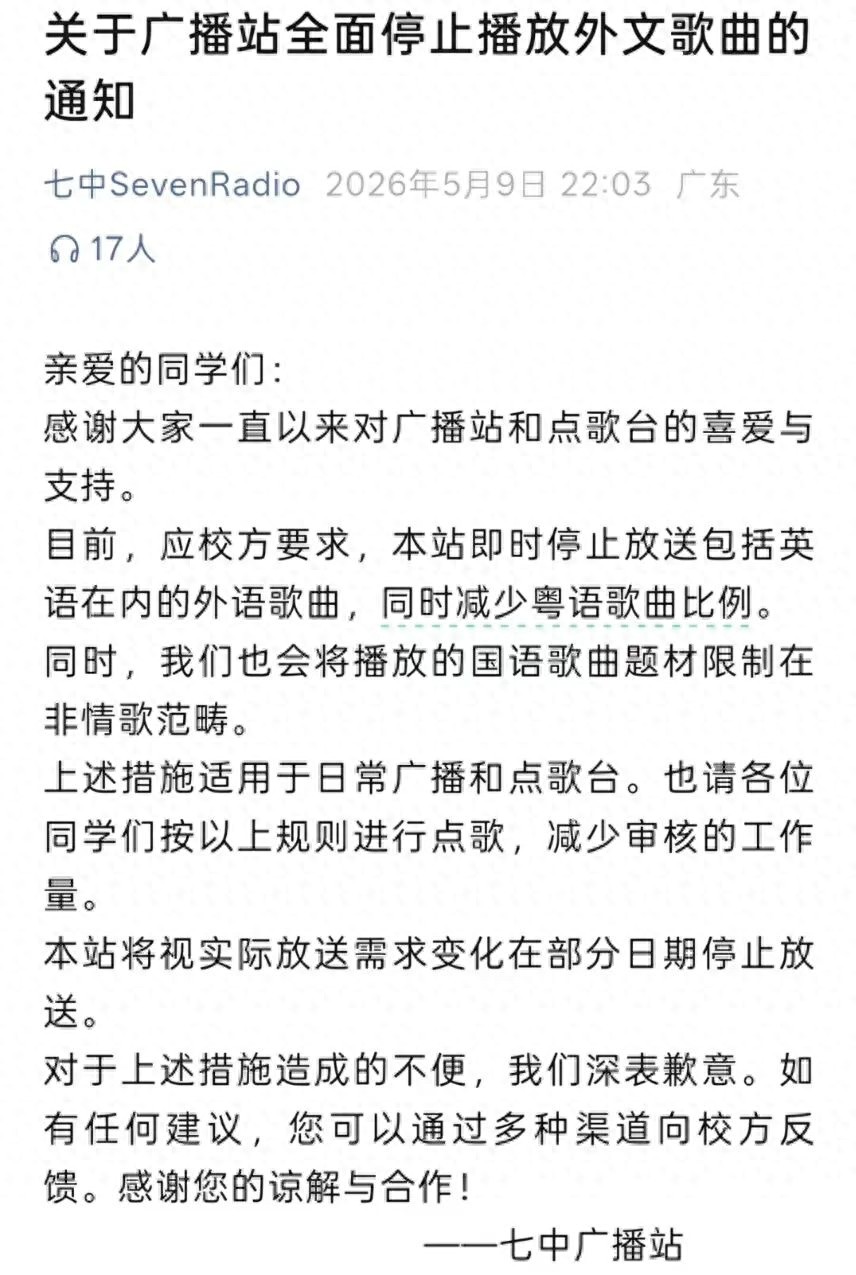 【来源:潇湘晨报】近日,多人发布广州七中《关于广播站全面停止播放外文歌曲的通知》截图,并引发热议,《通知》称应校方要求广播站停止放送包括英文歌在内的外语歌曲,减少粤语歌曲比例,同时也会将播放的国语歌曲
...[详细]
【来源:潇湘晨报】近日,多人发布广州七中《关于广播站全面停止播放外文歌曲的通知》截图,并引发热议,《通知》称应校方要求广播站停止放送包括英文歌在内的外语歌曲,减少粤语歌曲比例,同时也会将播放的国语歌曲
...[详细]
-
 午后的天空云朵开始堆砌傍晚到夜间沈阳地区有小雨并伴有雷电、短时大风、冰雹等强对流天气晚上出行要携带雨具开车的朋友要谨慎驾驶、注意安全明天白天我市部分地区还将受到阵雨或雷阵雨的叨扰同时大风也并未打算就此
...[详细]
午后的天空云朵开始堆砌傍晚到夜间沈阳地区有小雨并伴有雷电、短时大风、冰雹等强对流天气晚上出行要携带雨具开车的朋友要谨慎驾驶、注意安全明天白天我市部分地区还将受到阵雨或雷阵雨的叨扰同时大风也并未打算就此
...[详细]
-
 本报讯记者 刘友旺)5月6日,滨河西路北社村附近发生一起交通事故,一名伤者急需送医。面对沿途车流密集、路口众多的通行困境,清徐县公安局交管大队启动应急联动机制:警车带道、远程调控“绿波带”、医院周边警
...[详细]
本报讯记者 刘友旺)5月6日,滨河西路北社村附近发生一起交通事故,一名伤者急需送医。面对沿途车流密集、路口众多的通行困境,清徐县公安局交管大队启动应急联动机制:警车带道、远程调控“绿波带”、医院周边警
...[详细]
-
 近期,作为国内药品零售连锁巨头的老百姓603883.SH),陷入舆论与经营的双重漩涡。2025年年报显示,其营收净利双双下滑,叠加门店骗保风波及高额商誉风险,老百姓大药房正面临严峻考验。业绩“失速”:
...[详细]
近期,作为国内药品零售连锁巨头的老百姓603883.SH),陷入舆论与经营的双重漩涡。2025年年报显示,其营收净利双双下滑,叠加门店骗保风波及高额商誉风险,老百姓大药房正面临严峻考验。业绩“失速”:
...[详细]
-
 据中国载人航天工程办公室消息,天舟十号货运飞船入轨后顺利完成状态设置,成功对接于空间站天和核心舱后向端口。交会对接完成后,天舟十号将转入组合体飞行段。后续,神舟二十一号航天员乘组将进入天舟十号货运飞船
...[详细]
据中国载人航天工程办公室消息,天舟十号货运飞船入轨后顺利完成状态设置,成功对接于空间站天和核心舱后向端口。交会对接完成后,天舟十号将转入组合体飞行段。后续,神舟二十一号航天员乘组将进入天舟十号货运飞船
...[详细]
-
 【来源:三穗县融媒体中心】上学放学的欢声笑语里藏着少年们最鲜活的日常也藏着容易被忽视的安全小细节这份专属安全指南,一定要记牢!交通安全不是靠运气而是靠守规则把这些安全常识刻进日常安全才是上学路上的第一
...[详细]
【来源:三穗县融媒体中心】上学放学的欢声笑语里藏着少年们最鲜活的日常也藏着容易被忽视的安全小细节这份专属安全指南,一定要记牢!交通安全不是靠运气而是靠守规则把这些安全常识刻进日常安全才是上学路上的第一
...[详细]
-
 【来源:鹿城教育发布】5月7日,鹿城区副区长王永林带队深入校园一线,专项督导校园安全和食品安全工作,并同步调研教育基建项目建设情况,区发改局、区教育局、区财政局、区住建局、区市场监督管理局、区消防救援
...[详细]
【来源:鹿城教育发布】5月7日,鹿城区副区长王永林带队深入校园一线,专项督导校园安全和食品安全工作,并同步调研教育基建项目建设情况,区发改局、区教育局、区财政局、区住建局、区市场监督管理局、区消防救援
...[详细]
-
网传四川宜宾人员关联境外邮轮疫情 官方通报:无时空交集,陈某下船至今39天无相关症状,核酸检测为阴性
 5月9日,四川省宜宾市疾病预防控制中心就网传该市人员涉“洪迪厄斯”号邮轮相关情况发布通报。近日,网络出现宜宾市人员关联境外邮轮疫情相关传言。经核查,现将有关情况通报如下:宜宾籍人员陈某于3月31日下船
...[详细]
5月9日,四川省宜宾市疾病预防控制中心就网传该市人员涉“洪迪厄斯”号邮轮相关情况发布通报。近日,网络出现宜宾市人员关联境外邮轮疫情相关传言。经核查,现将有关情况通报如下:宜宾籍人员陈某于3月31日下船
...[详细]
-
 观点网讯:5月11日,深圳乐动机器人股份有限公司股票代码:01236.HK)正式在港交所主板挂牌上市,首日高开102%,报53.5港元,总市值约178亿港元。信息显示,乐动机器人此次全球发售3333.
...[详细]
观点网讯:5月11日,深圳乐动机器人股份有限公司股票代码:01236.HK)正式在港交所主板挂牌上市,首日高开102%,报53.5港元,总市值约178亿港元。信息显示,乐动机器人此次全球发售3333.
...[详细]
-
 很多人从小就被教导:临睡前一定要刷牙,这样最干净、最健康。可事实真的如此吗?口腔专家给出的答案,可能会让你意外。湖南日报全媒体记者 王铭俊【知识多一点】“临睡前刷牙最健康”是很多人深信不疑的习惯,实则
...[详细]
很多人从小就被教导:临睡前一定要刷牙,这样最干净、最健康。可事实真的如此吗?口腔专家给出的答案,可能会让你意外。湖南日报全媒体记者 王铭俊【知识多一点】“临睡前刷牙最健康”是很多人深信不疑的习惯,实则
...[详细]